


What Are the Common Challenges in Glue Filling and How Can Automation Solve Them?
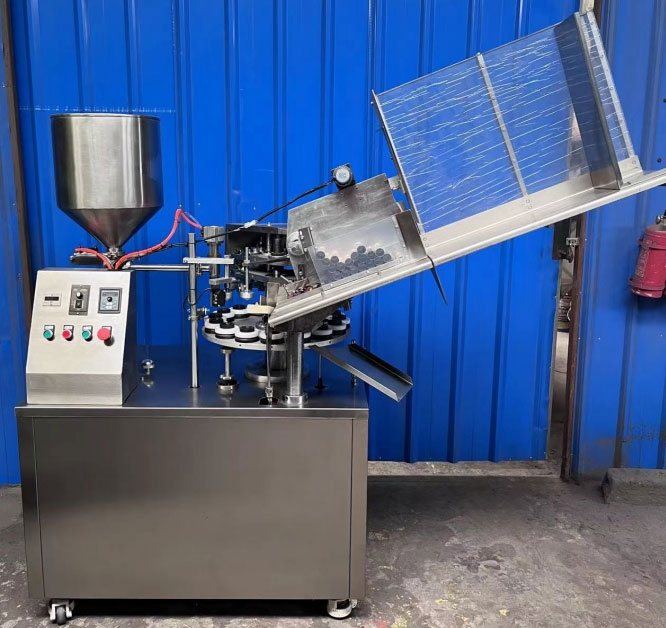
Filling adhesive products—especially cyanoacrylate (super glue), epoxy, and other reactive materials—presents unique challenges that standard filling equipment cannot address. Understanding these challenges is the first step toward selecting the right glue filling machine.
Challenge 1: Wire-Drawing (Stringing)
The Problem: When filling viscous adhesives, a thin string of product often trails from the nozzle after filling, creating mess and inconsistent fill weights.
The Solution: The JGF-C automatic glue filling machine is specifically designed to solve the wire-drawing problem commonly existing in the production process. Its precision metering system and clean cut-off mechanism ensure a clean break, eliminating waste and improving product appearance.
Challenge 2: Leaking at the Tail After Sealing
The Problem: Poorly sealed tube tails can lead to product leakage during transportation and storage—a costly issue for manufacturers and a frustration for customers.
The Solution: The JGF-C uses the most advanced horseshoe folding mechanism. This produces neat, tightly sealed tails that effectively prevent leakage. The machine thoroughly solves the common fault of leaking at the tail after sealing.
Challenge 3: Material Solidification (for Reactive Adhesives)
The Problem: Products like cyanoacrylate (502 glue) can solidify during filling or storage if exposed to moisture or air.
The Solution: For these sensitive materials, the JGF-C offers an optional gas protection device that prevents solidification during transportation and storage after sealing. This feature is particularly valuable for manufacturers of instant adhesives.
Challenge 4: Inconsistent Fill Volumes
The Problem: Manual or poorly calibrated equipment leads to under-filled or over-filled containers, causing waste and compliance issues.
The Solution: The JGF-C adopts a volume mode to achieve precise filling with a measuring error of less than 1%. This accuracy ensures each tube contains the exact specified volume.
Challenge 5: Warm Filling Requirements
The Problem: Some materials (like certain sealants) need to be filled at elevated temperatures to maintain proper viscosity.
The Solution: The JGF-C offers an optional heating and mixing hopper for materials that require warm filling.
| Challenge | JGF-C Solution |
|---|---|
| Wire-drawing | Precision cut-off mechanism |
| Tail leakage | Advanced horseshoe folding |
| Solidification | Optional gas protection |
| Inconsistent fill | ±1% volumetric precision |
| Warm filling needs | Optional heating hopper |
Beyond the Machine: Integrated Solutions
Many manufacturers combine the JGF-C with upstream and downstream equipment for complete production lines. For example, a glue filling and capping machine configuration can handle both filling and sealing in one operation, while integration with a glue bottle filling machine setup accommodates plastic bottle packaging.
For specialized applications like eyelash extension glue tube filling machine or eyelash glue filling machine setups, the JGF-C's adjustable parameters (tube diameter 10-50mm, tube length 50-180mm) provide the necessary flexibility.





